
Planning wedding transportation sounds simple until you’re staring at a timeline with five locations, a bridal party of twelve, two sets of parents, a photographer who wants “golden hour” portraits, and a ceremony that starts exactly on time. Suddenly, the question isn’t “Should we get a car?” but “How many wedding cars do we actually need so nobody is late, stressed, or stranded?”
This guide gives you a straightforward planning formula you can use in 10–15 minutes, plus real-world scenarios and a few practical tips that couples tend to learn the hard way. The goal is to help you book the right number of vehicles (not too many, not too few), keep your schedule smooth, and make your day feel calm from the first pickup to the final send-off.
We’ll also talk about when a single luxury car is perfect, when you need a small fleet, how to plan for photo stops, and how to avoid the classic issues: missing seatbelts, forgotten bouquets, and that one groomsman who “just needs five more minutes.”
The simple formula: count trips, not cars
The easiest way to figure out the right number of wedding cars is to stop thinking in terms of “vehicles” and start thinking in terms of “trips.” A trip is a point-to-point movement that needs to happen on time with specific people inside. Cars can do multiple trips, but only if the timing and distance allow it.
Here’s the planning formula you can use:
Number of cars you need = Peak simultaneous trips + Buffer for timing risk
“Peak simultaneous trips” means the maximum number of separate rides happening at the same time (or overlapping). “Buffer for timing risk” is usually one extra vehicle or a plan that prevents a single delay from cascading into the whole day.
To use the formula, you’ll map your day into blocks: getting ready → ceremony → photos → reception → after-party/hotel. In each block, identify who must travel, from where to where, and whether those rides overlap. You’ll be surprised how quickly the right answer becomes obvious once you see the overlaps.
Start with a transportation map of your day
List every location (even the “quick” stops)
Make a simple list of every address involved: where each partner is getting ready, the ceremony site, photo locations, the reception, and the final destination (hotel, home, airport for a next-day flight, etc.). If you’re doing a first look, add that spot too. If you’re planning a stop for sunset photos or a quick toast with the wedding party, include it.
These “small” stops are where transportation plans often break. A five-minute detour can turn into a 25-minute delay once you factor in parking, walking, wrangling outfits, and getting everyone back into the vehicle. Writing everything down keeps you honest about how many movements the day really includes.
Also note any location restrictions: downtown loading zones, venues that require shuttles from offsite lots, or ceremony sites with limited parking. Restrictions don’t automatically mean you need more vehicles, but they do affect timing—and timing affects whether one car can handle multiple trips.
Group people into “must-arrive-together” teams
Next, group your people by how they need to arrive. Common “teams” include: Partner A + VIPs, Partner B + VIPs, wedding party, parents, grandparents, and vendors (photographer, planner, hair/makeup team). Some groups can arrive separately with no impact, while others need to arrive together for photos or processional order.
It helps to decide early whether you want the wedding party traveling together or split by sides. Traveling together can be fun and simplifies headcounts, but it also means one late person can delay everyone. Splitting can reduce risk but may require an extra vehicle.
For grandparents or anyone with mobility needs, plan a dedicated ride if possible. It’s not just about comfort—it’s about keeping the main schedule from being derailed by accessibility challenges, longer boarding times, or last-minute route changes.
Calculate your peak simultaneous trips
The “ceremony arrival window” is usually the peak
For most weddings, the busiest overlap happens right before the ceremony. Partner A may be traveling from one getting-ready location, Partner B from another, parents from a hotel, and the wedding party from wherever they were staged for photos or prep. If these rides need to happen within the same 20–40-minute window, you’ve found your peak.
Count how many separate vehicles are required for everyone to arrive on time without forcing a single car to do a drop-off, drive back, and return again. If the distance between locations is more than a few minutes, one vehicle doing multiple runs becomes risky fast.
As a rule of thumb: if a vehicle would need to complete a round trip during a tight arrival window, assume it can’t. Traffic, parking, and “where do we put the car while you walk in?” all add unpredictability.
Don’t forget the “hidden” overlapping trips
Some trips overlap even if they aren’t obvious. For example, if your photographer wants detail shots at the ceremony site before guests arrive, you may need to transport a dress, flowers, or décor early. Or your planner may need to arrive ahead of the wedding party with items that can’t be left unattended.
Another common overlap: one partner leaves early for photos while the other is still finishing prep. If you’re doing a first look at a separate location, that can create an extra trip block that needs its own timing and vehicle capacity.
When in doubt, build your plan around the moments that must be punctual: ceremony start, grand entrance, and any scheduled photo sessions. Those are the anchors of your day, and transportation should support them—not threaten them.
Choose a “base plan” using three common wedding sizes
Small wedding (0–30 guests): often 1–2 cars
If you’re having a small wedding and everyone is staying nearby, you can often cover the day with one primary vehicle for the couple and a second for VIPs. The couple’s car can handle: getting-ready pickup → ceremony → photos → reception → send-off. The VIP car can handle parents, grandparents, or anyone who needs extra comfort and a predictable schedule.
The main thing to watch in small weddings is not guest count, but location count. A 20-guest wedding with four locations can require more vehicles than a 120-guest wedding where everything is on one property.
If you’re debating whether to add a second vehicle, ask: “If our main car is delayed by 15 minutes, does the day still work?” If the honest answer is no, a second vehicle is usually worth it.
Medium wedding (30–100 guests): typically 2–4 vehicles
For a medium-sized wedding, the couple often has a dedicated car, and the wedding party and parents may need separate transportation. A common setup is: one luxury sedan for the couple, one SUV or sedan for parents/VIPs, and one larger vehicle (sprinter/van/mini-bus) for the wedding party.
This is also where logistics like “where do cars wait?” matters. If the ceremony venue is strict about curb access, you may want fewer vehicles arriving at once—but those vehicles need enough seats to keep things efficient.
Medium weddings also tend to include more photo movement: first look, bridal party portraits, family photos, and couple portraits. If photos happen offsite, you’ll want transportation that can keep the group together without multiple back-and-forth runs.
Larger wedding (100+ guests): 4+ vehicles or a shuttle plan
Once you’re above 100 guests, you’re often dealing with parking constraints, hotel blocks, and a larger vendor team. Many couples shift from “cars” to “a transportation system,” which usually means: a couple’s car + VIP transportation + one or more guest shuttles.
Even if guests are driving themselves, consider a shuttle if your venue has limited parking, is remote, or you’re worried about guests drinking. A shuttle can reduce late arrivals and improve safety, and it also keeps the venue’s parking plan from becoming your problem.
For large weddings, the peak simultaneous trips almost always includes at least one guest movement (hotel → venue) while the couple and wedding party are also moving. That overlap is why larger weddings typically need more vehicles, even if distances are short.
Factor in capacity the right way (it’s not just seat count)
Outfits, bouquets, and personal space matter
A vehicle that technically seats five might not comfortably fit a bride in a full gown plus a photographer trying to capture a few candid moments. Add bouquets, garment bags, and touch-up kits, and “enough seats” can still feel cramped.
Think about the ride experience you want. If you want calm, quiet time before the ceremony, a little extra space goes a long way. If you want a fun, high-energy ride with the wedding party, you’ll want enough room for everyone to sit comfortably and keep outfits intact.
It’s also worth considering temperature and comfort. Weddings often involve a lot of waiting—outside venues, during photo stops, and between events. A comfortable vehicle can be a real stress reducer when the day inevitably runs a little behind.
Build in “carry capacity” for day-of essentials
Transportation often becomes the unofficial storage unit for the day. You may need to move: vow books, rings (securely), emergency kit, extra shoes, gifts, card box, signage, and sometimes even a change of outfit for an after-party.
If you’ll be doing photos at multiple locations, plan where these items will live. Assign someone to be responsible for checking the car before leaving each stop. It sounds small, but it prevents the classic “the bouquet is still in the trunk at the ceremony site” moment.
When you’re deciding between one larger vehicle vs. two smaller ones, storage can be the deciding factor. Two small cars can create confusion about where items are, while one larger vehicle can keep things centralized—if the timing works.
Timing buffers: the secret to fewer cars and less stress
Use a 15/30 rule for local travel
Even if Google Maps says a drive is 12 minutes, don’t schedule it as 12 minutes. A simple planning approach is the 15/30 rule: add 15 minutes of buffer for short local trips (under 20 minutes) and 30 minutes for anything longer or more complex (downtown, beach areas, event-heavy zones).
This buffer accounts for loading people into the car, adjusting outfits, getting everyone settled, and the inevitable “Wait, where’s my phone?” moment. It also gives you breathing room if the driver needs to find a staging area or alternate entrance.
Buffers can reduce the number of vehicles you need because they make it more realistic for one vehicle to complete multiple trips without creating a domino effect of lateness. But buffers only help if you actually build them into the schedule, not just “hope” for them.
Identify your two non-negotiable times
Pick two moments that cannot slip: usually the ceremony start time and the reception grand entrance (or dinner service). Then design transportation so those moments are protected even if everything else runs a bit long.
For example, you can plan couple portraits with flexibility, but you can’t plan transportation that requires the same vehicle to be in two places at once. If protecting the ceremony start means adding one extra car for VIPs, it’s often the best money you’ll spend all day.
When transportation is built around non-negotiables, you’ll feel the difference. The day becomes less about rushing and more about enjoying the parts you actually planned for.
Common wedding transportation setups that work well
Setup A: One hero car + one support car
This is a great fit for many weddings: one standout vehicle for the couple (often a luxury sedan) and one support vehicle for parents, grandparents, or the wedding party. The hero car is your “storytelling” vehicle—the one that shows up in photos and makes arrivals feel special.
The support car is your logistics workhorse. It handles early arrivals, quick errands, and any unexpected changes. If someone needs to leave early, or if a family member needs a quiet ride, the support car keeps the main plan intact.
This setup is also budget-friendly compared to booking multiple large vehicles, and it still gives you redundancy if one ride runs late.
Setup B: Couple car + wedding party sprinter + VIP sedan
If you have a larger wedding party or multiple photo locations, a sprinter (or similar) can keep everyone together and simplify timing. The couple still gets their own vehicle for privacy and pacing, while the wedding party travels as a group.
The VIP sedan keeps parents and grandparents comfortable and on schedule without requiring them to coordinate with the wedding party’s energy and timing.
This setup tends to create the smoothest pre-ceremony experience because each group has a clear plan and fewer moving parts.
Setup C: Couple car + guest shuttles (hotel loop)
If guests are staying in one or two hotels, a shuttle loop can be a lifesaver. It reduces parking stress, keeps guests arriving in a predictable window, and helps everyone feel taken care of—especially out-of-town friends and family.
The couple’s car remains separate so you’re not tied to the shuttle schedule. You can leave early for photos, arrive privately, and depart when you want without coordinating with a bus timetable.
This setup is especially helpful when venues have limited parking, when the ceremony and reception are in different places, or when you want to encourage guests not to drive after drinking.
How photos change the number of cars you need
First look and offsite portraits add “extra trips”
If you’re doing a first look at a separate location, you’ve added at least one extra trip for one or both partners, plus potentially a trip for the photographer and videographer if they’re not already with you. It’s not a problem—it just needs to be planned.
Offsite portraits can be magical, but they’re also where timing gets squishy. You might arrive and realize the spot is crowded, windy, or not what you expected, and decide to pivot. A flexible transportation plan makes that pivot possible without panic.
If you know you want multiple photo locations, consider dedicating one vehicle to the couple and one to the photo team/wedding party. That way, you’re not constantly reorganizing who rides where between stops.
Golden hour portraits can conflict with cocktail hour logistics
Golden hour often lands during cocktail hour, which is also when guests are moving, vendors are flipping spaces, and the wedding party might be needed for introductions. If your transportation plan requires the same car to handle multiple groups during that window, it can get messy.
A simple fix is to ensure the couple’s vehicle is always available during photo time. Let other vehicles handle guest or VIP movements. That separation keeps your portrait schedule from being disrupted by someone else’s needs.
Also, talk to your photographer about travel time between photo spots. If they’re expecting 10 minutes and it’s actually 25, you’ll feel it in the entire reception timeline.
San Diego-specific considerations (traffic, geography, and vibe)
Microclimates and coastal traffic are real
San Diego is famous for great weather, but it’s also a city of microclimates. Coastal areas can be cooler and foggier, while inland locations can be much hotter. That matters for transportation because you may want a vehicle that keeps everyone comfortable and protects hair/makeup between stops.
Traffic patterns can also surprise visitors. Beach towns, downtown, and popular weekend corridors can add time quickly. If your ceremony is near the coast and your reception is inland (or vice versa), build in more buffer than you think you need.
If you want the day to feel effortless, it helps to work with professionals who know the area well and can anticipate timing issues. Many couples looking for chauffeur services in San Diego do so specifically because local expertise can be the difference between a smooth arrival and a stressful scramble.
Venue layouts can affect curb access and staging
Some venues have beautiful entrances but limited curb space. Others require a long walk from parking to the ceremony site. These details influence whether you want one larger vehicle or multiple smaller ones, and whether you need a staging plan for arrivals.
Ask your venue (or planner) where vehicles can wait, where drop-offs happen, and whether there are restrictions on idling or parking. If you’re using multiple cars, confirm whether they can line up or if they must arrive in a specific order.
Good staging keeps the day feeling organized. It also helps your photographer capture arrivals without a chaotic background of cars trying to squeeze into the same spot.
Choosing the right vehicle types for your headcount and style
Luxury sedan: best for the couple or VIPs
A luxury sedan is classic for a reason: it’s elegant, comfortable, and easy to maneuver in tight areas. It’s great for the couple if you want a quiet moment between events, and it’s also ideal for parents or grandparents who prefer a calm ride.
If you’re trying to keep the number of vehicles low, a sedan works best when locations are close and you don’t need to move a big group at once. It’s less ideal if you have a very large dress, multiple passengers, or lots of items to transport.
For many couples, the sedan becomes the “anchor” of the day—always available, always on time, always comfortable.
SUV: great for flexibility and storage
An SUV is a strong choice when you need more storage and a bit more space without jumping to a van or bus. It’s helpful for transporting essentials, accommodating larger outfits, or providing a comfortable ride for VIPs.
SUVs also work well if your plan includes a few quick stops. They’re easier to park and stage than larger vehicles, which can matter in busy areas.
If you’re torn between two sedans vs. one SUV, think about your “stuff” and your comfort level. The extra room can reduce stress more than you’d expect.
Sprinter/van: best for the wedding party
Keeping the wedding party together simplifies timing, reduces the chance of someone getting lost, and keeps the vibe fun. A van or sprinter also helps preserve outfits—less squeezing, less wrinkling, fewer last-minute touch-ups.
If your wedding party is large, this can be the single most impactful transportation decision you make. It turns multiple moving parts into one coordinated group.
Just remember: you’ll still want a plan for anyone who needs to arrive earlier or leave later. That’s where a support car can help.
When a statement car makes sense (and when it doesn’t)
Use a statement car for moments you’ll actually remember
A statement car is most worth it when it’s tied to meaningful moments: arriving at the ceremony, stepping out for photos, or making a grand exit. If it’s just going to sit parked while you’re inside for hours, it may not deliver as much value.
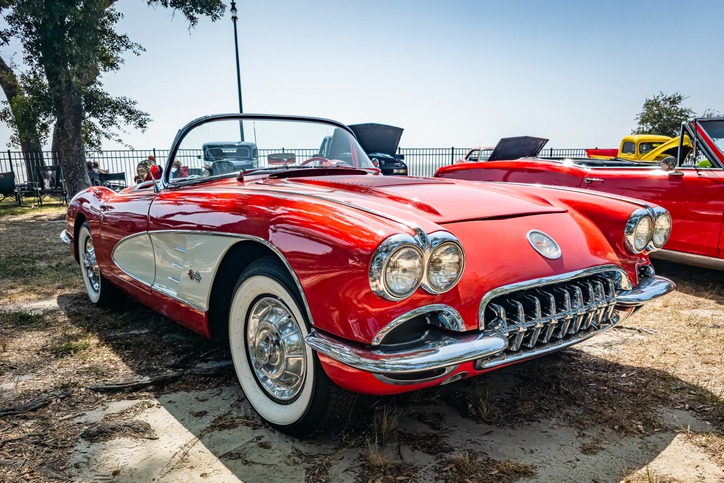
Think about how you want the day to feel. If you love classic style, a vintage-inspired luxury car can add an unforgettable touch. If your wedding is modern and sleek, a high-end sedan might match better.
Some couples also choose a statement car purely for photos, scheduling it for a specific time block rather than the entire day. That approach can free up budget for additional practical vehicles like a shuttle or VIP car.
Match the car to your photo plan and venue aesthetic
If your venue has a dramatic entrance, a statement car can look incredible in photos. If your venue has a tight driveway or limited curb access, a smaller luxury vehicle might be more practical than something oversized.
Also consider your dress and comfort. If you’re wearing a very full gown, test whether the car is easy to get in and out of without stress. The best photo is the one where you look relaxed, not the one where you’re awkwardly trying to fold a dress into a seat.
If you’re drawn to the timeless look of a Rolls, exploring a Rolls Royce rental service in San Diego can be a fun way to elevate the day—especially if you plan the timing so the car is present for the key photo moments and major transitions.
How to plan pickups and drop-offs without chaos
Create a pickup sheet with names, times, and phone numbers
A pickup sheet is one of those simple tools that prevents 20 texts on the wedding morning. List each pickup location, the names of passengers, the exact pickup time (with a “be ready by” time 10 minutes earlier), and one contact person per group.
Don’t make the couple the contact person. Choose a planner, a maid of honor, a best man, or a trusted family member. The couple should be focused on getting ready and enjoying the day, not coordinating curbside logistics.
Share the pickup sheet with everyone involved at least a week in advance, and again the day before. People forget. Repetition is kindness.
Plan where cars will wait between events
Between ceremony and reception, there’s often a gap for photos. Decide where vehicles will be during that time. Will they wait onsite, stage nearby, or return later? The answer affects cost and timing.
If vehicles leave and come back, build in buffer. If they wait nearby, confirm there’s a legal and convenient place to do so. This is especially important in busy areas where parking enforcement is strict.
When you plan waiting logistics, you reduce the odds of last-minute confusion like “Where is the car?” or “We can’t find a place to pull in.”
Budgeting: where transportation money has the biggest payoff
Spend on reliability before upgrades
It’s tempting to put the whole transportation budget into one glamorous vehicle. But if that choice leaves you without a backup plan for VIPs or creates timing risk, it can backfire. Reliability—on-time arrivals, clear communication, and a schedule that actually works—is what makes the day feel luxurious.
If you’re deciding between a higher-end car and an extra support vehicle, the support vehicle often improves the day more. It gives you flexibility for late changes, unexpected needs, and the natural unpredictability of wedding timelines.
Once reliability is covered, upgrades like a statement car, extra photo time, or a more spacious vehicle become fun choices rather than risky ones.
Use the “stress test” to justify an extra vehicle
Here’s a quick stress test: imagine one key event runs 20 minutes late (hair/makeup, family photos, a late relative). If your transportation plan still works, you’re in good shape. If the whole day collapses, you need either more buffer or one additional vehicle.
Most couples don’t regret adding a small layer of redundancy. They do regret trying to run a tight schedule with no room for real life.
Transportation is one of those behind-the-scenes things that guests may not notice when it’s perfect, but everyone feels when it’s not.
Putting it all together: a few sample formulas you can copy
Scenario 1: Two getting-ready locations, one venue, wedding party of 8
Peak trips: Partner A to venue, Partner B to venue, wedding party to venue, parents to venue (overlapping). That’s up to 4 simultaneous trips depending on timing and distance.
Simple plan: 1 couple car (handles Partner A + Partner B separately if timing allows, or just one partner), 1 wedding party van, 1 VIP sedan for parents/grandparents. If the two getting-ready locations are far apart and both partners need to arrive within the same window, add one more sedan or SUV.
Buffer idea: Have parents arrive earlier than the wedding party. That reduces overlap and can drop your peak trip count.
Scenario 2: First look offsite + ceremony downtown + reception at a different venue
Peak trips: Couple to first look, wedding party to first look, then everyone to ceremony, then to reception. Multiple overlaps plus parking/staging complexity.
Simple plan: 1 dedicated couple car (always available), 1 wedding party van, 1 VIP sedan, and consider a shuttle for guests if parking is limited. This plan keeps the couple’s timeline protected even if the group timeline shifts.
Buffer idea: Schedule the first look earlier than you think you need. Offsite photos almost always take longer than planned.
Scenario 3: Hotel block + remote venue with limited parking
Peak trips: Guests moving hotel → venue while the couple and wedding party also move. Overlap is unavoidable.
Simple plan: 1 couple car + 1 VIP vehicle + guest shuttles on a loop. If the wedding party is also at the hotel, put them on a dedicated earlier shuttle or separate van so they arrive before guests.
Buffer idea: Set a “last shuttle” time that is earlier than the ceremony start by at least 45–60 minutes. It feels strict, but it prevents late arrivals.
One last detail that ties everything together: communication
Share the plan early so nobody improvises on the day
Transportation plans fall apart when people start improvising: someone decides to ride with someone else, someone runs back for an item, someone assumes they can “just Uber.” Sharing the plan early makes it feel official and reduces last-minute changes.
Send a simple message to each group: pickup time, pickup location, who they’re riding with, and who to contact if anything changes. Keep it short and clear. If you have a planner, let them be the hub.
If you’re working with a professional team for wedding day transportation, ask what they need from you to make communication easy—some providers offer templates or day-of coordination support that can reduce your workload.
Assign one person to do a quick “car check” at each stop
This is a tiny habit that prevents big headaches. Choose one responsible person (not the couple) to check seats and floorboards before leaving each location. They’re looking for phones, vow books, boutonnieres, gifts, or anything that could be missed.
The car check also helps keep personal items secure. Weddings are busy, and it’s easy for things to get misplaced when multiple people are hopping in and out for photos.
When you combine a clear plan with a simple system like this, transportation becomes the calm backbone of your timeline rather than a source of stress.
If you use the formula—peak simultaneous trips + buffer—and then shape it around your locations, photo plans, and VIP needs, you’ll land on a number of cars that feels right. Not excessive, not risky, just smooth. And that’s exactly what you want on a day where you should be thinking about the people you love, not the logistics of getting from point A to point B.
















































































0